Why You React So Strongly in Fights: A Practical Guide to Managing Trauma at Home
A gentle note: If you are someone who is actively struggling with trauma, please know that this space is only a starting point. These ideas come from my understanding and clinical experience, but they are not a substitute for therapy.
If anything you read here feels too intense or difficult to handle on your own, seeking professional support is not just helpful—it is important. You deserve support that meets you where you are.
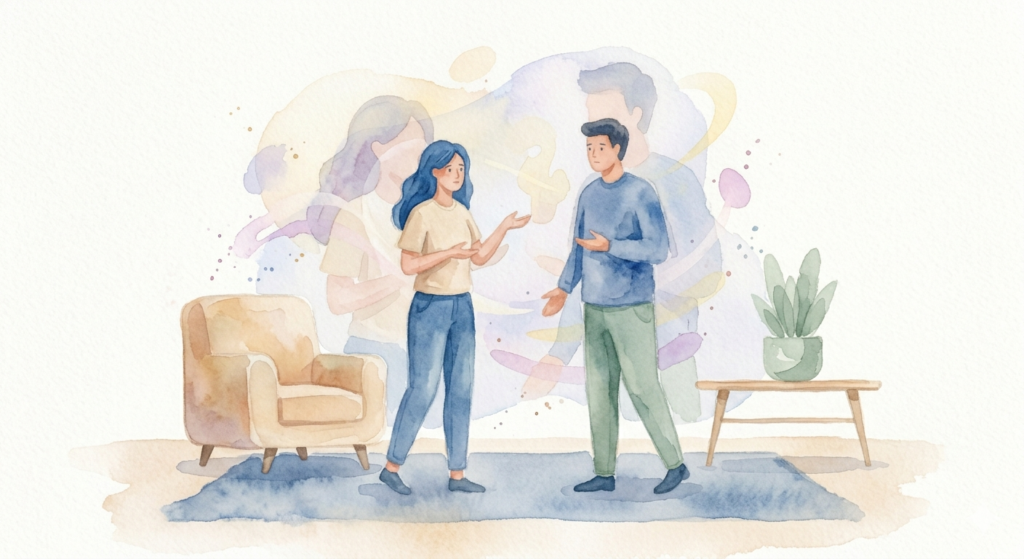
Some fights at home are not about the present moment. Some fights are about the body remembering something old.
I see this pattern often in my clinical work. I work as a clinical psychologist with individuals, couples, and families. I also engage in research on trauma, behavior patterns, and emotional regulation. My work includes structured assessment, therapy planning, and long-term follow-up. My approach combines evidence-based models with real-life practicality.
This article explains why conflict at home can feel intense. This article gives you tools you can use today.
What Trauma Does Inside the Body
The Body Keeps the Score by Bessel van der Kolk explains a simple idea:
“The body keeps the score.”
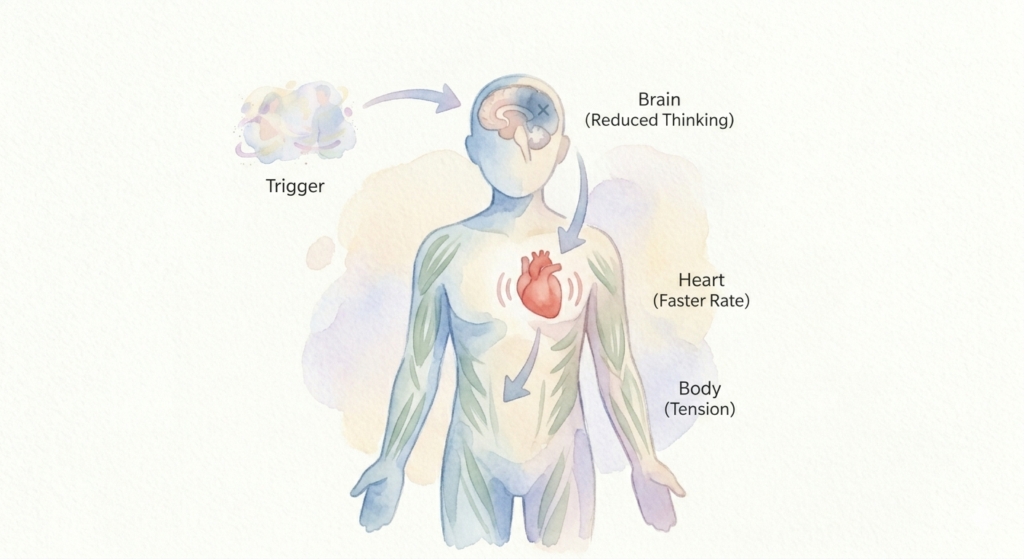
Your nervous system stores past experiences. Your brain detects threat faster than logic. Your body reacts before words form.
Key facts:
Trauma changes stress response systems.
The brain shifts into survival mode quickly.
The body produces fight, flight, freeze, or collapse responses.
The prefrontal cortex reduces activity during high stress.
Clear pattern:
A tone triggers memory.
The body reacts with tension.
The voice becomes louder or shuts down.
The conflict escalates.
This is not a personality flaw. This is a nervous system response.
Why Fights at Home Feel So Intense
Home is a place of attachment. Attachment increases emotional sensitivity, as attachment theory demonstrates (Bowlby, 1969).
Simple structure:
Close relationships increase emotional investment.
Emotional investment increases reactivity.
Reactivity reduces thinking clarity.
Reduced clarity increases conflict.
Peter Levine, known for Waking the Tiger, explains that trauma is not the event. Trauma is the stuck energy in the nervous system.
“Trauma is not what happens to us, but what we hold inside.”
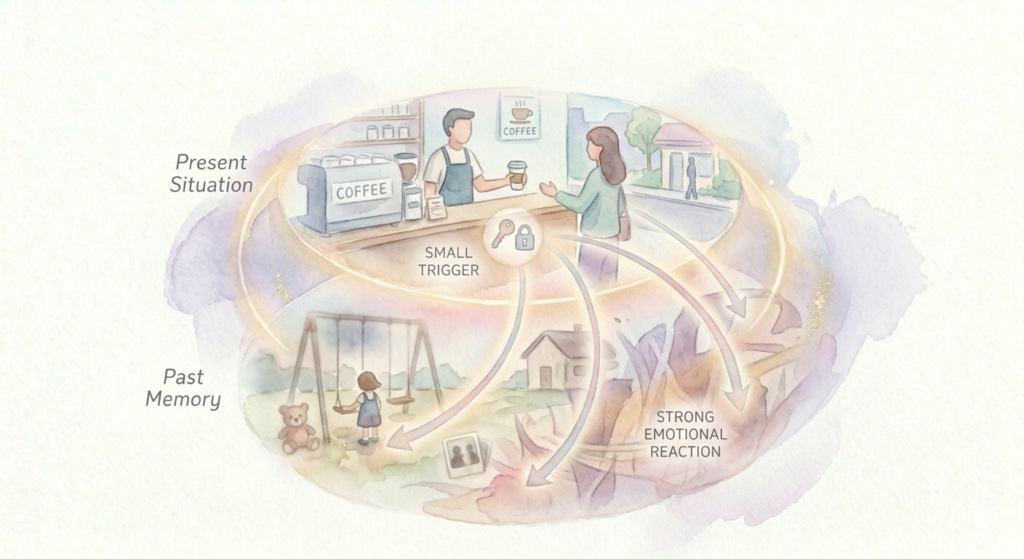
When your partner raises their voice, your system may respond as if danger is present. Your reaction belongs to the present and the past at the same time. Levine adds, “The symptoms of trauma are the result of the immobility response” (p. 117), where frozen energy from past threats lingers.
What EMDR Teaches About Triggers
Francine Shapiro developed EMDR and wrote Getting Past Your Past.
Her work shows a clear process:
The brain stores unprocessed memories of disturbing experiences.
Triggers activate these memories through sensory input.
The body reacts with the same intensity.
Example: A small disagreement triggers a strong reaction. The intensity feels confusing. The reaction connects to an earlier unresolved experience.
This is why people say, “I don’t know why I reacted like that.”
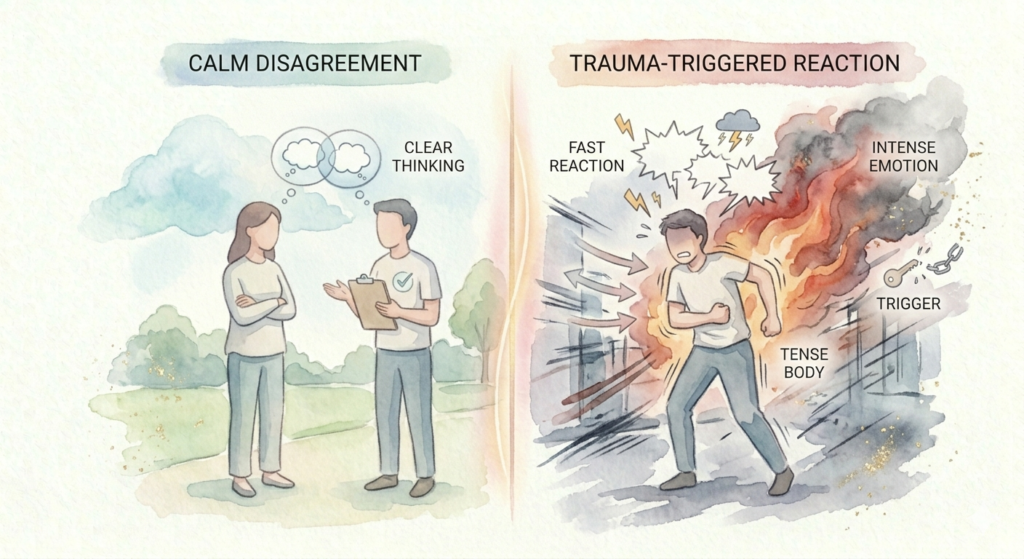
What “Fighting from Trauma” Looks Like
You can identify patterns clearly.
Common signs:
You react faster than you think.
You feel unsafe during simple disagreements.
You repeat the same arguments.
You feel exhausted after conflict.
You shift between anger and withdrawal.
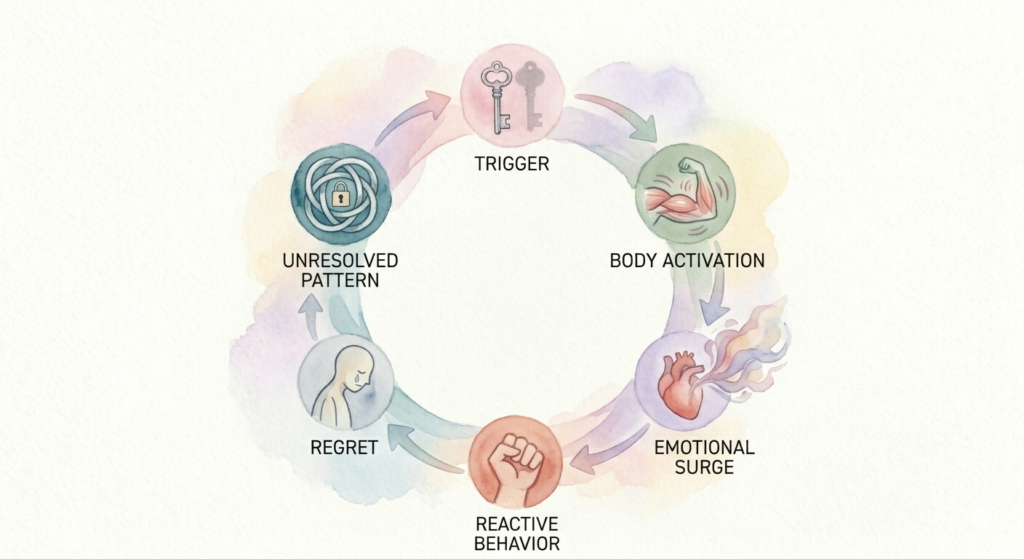
Clear sequence:
Trigger appears.
Body activates.
Emotion rises quickly.
Words follow emotion.
Regret appears later.
This sequence is predictable. This sequence is changeable.
This sequence is predictable. This sequence is changeable, as van der Kolk affirms: “Neuroscience research shows we can change the way the brain works by changing our behavior” (van der Kolk, 2014, p. 242).
Practical Tools You Can Use at Home
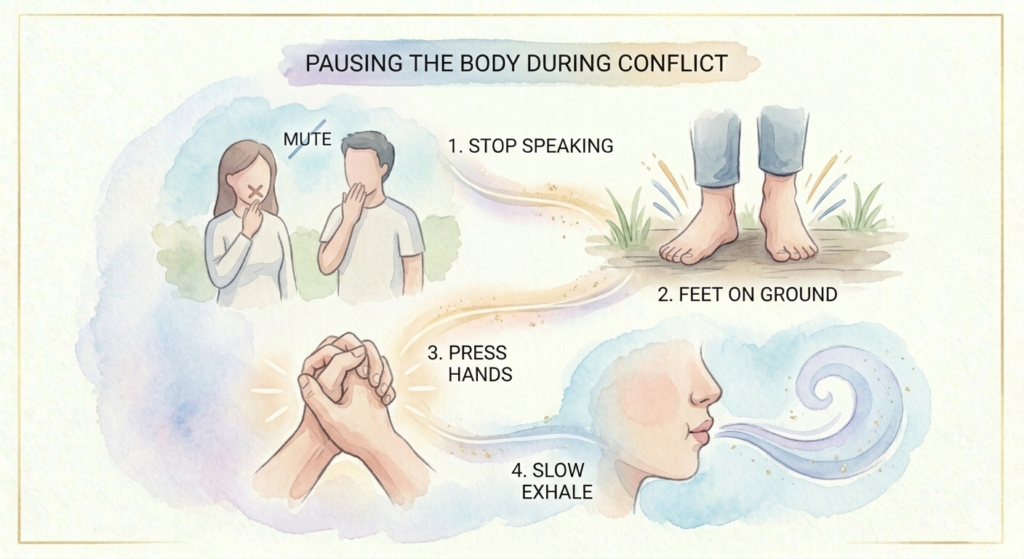
1. Pause the Body, Not the Conversation
Action steps:
Stop speaking for 10 seconds.
Place your feet flat on the ground.
Press your hands together.
Exhale slowly for 6 seconds.
Why it works:
Slow breathing reduces nervous system activation.
Grounding increases present awareness.
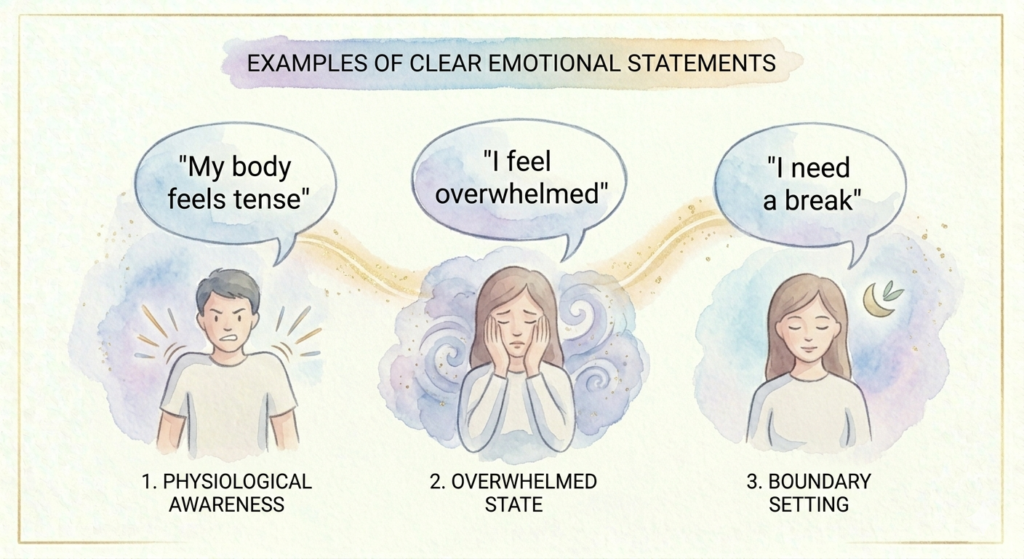
2. Name the State Clearly
Use direct language.
Examples:
“My body feels tense.”
“I feel overwhelmed.”
“I need a short break.”
Structure matters:
Clear words reduce misunderstanding.
Direct statements reduce escalation.
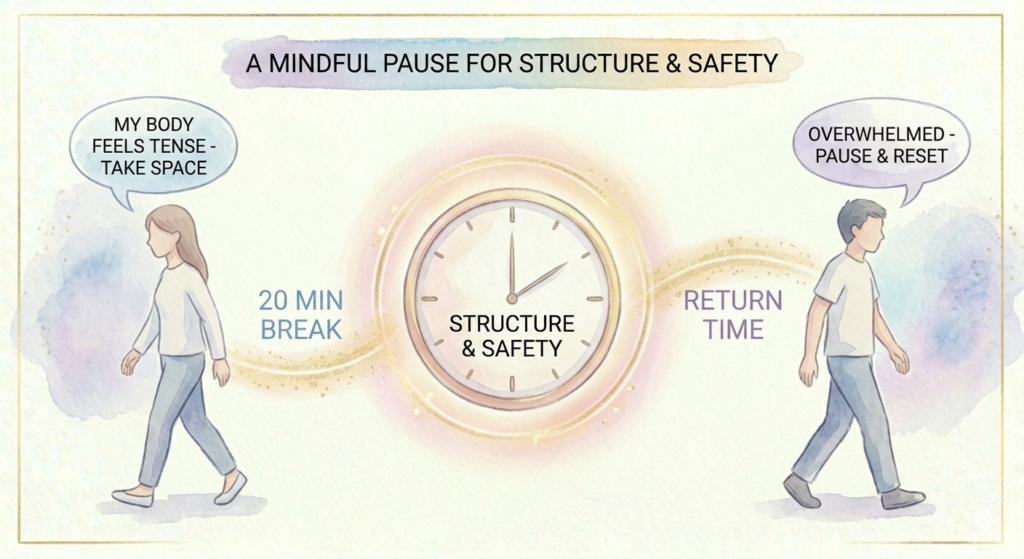
3. Set a Time Boundary
Do not abandon the conversation. Do not continue in a triggered state.
Use this format:
“I need 20 minutes.”
“I will come back at 6:30.”
Why it helps:
Predictability builds safety.
Safety reduces defensive reactions.
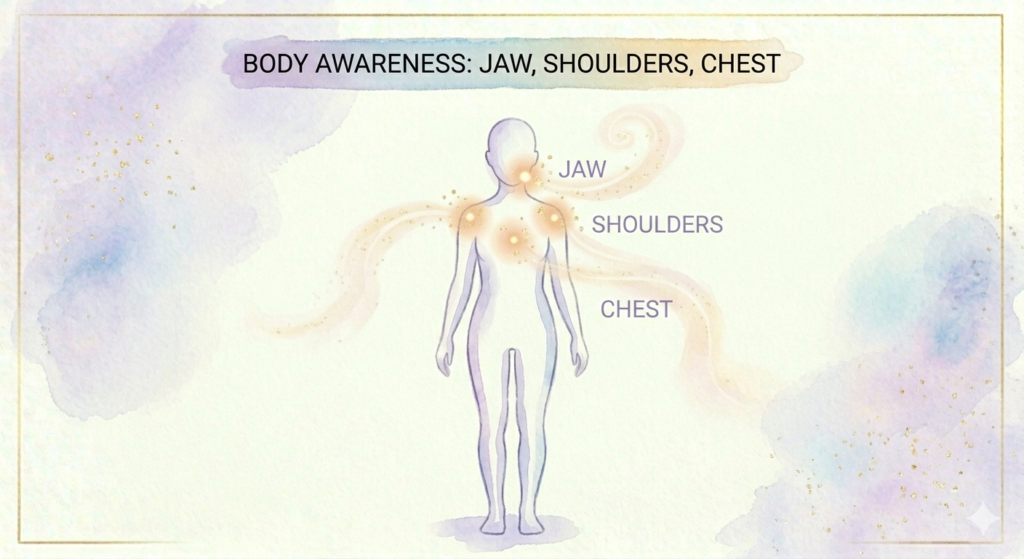
4. Track Your Body Signals Daily
Awareness reduces reactivity.
Simple tracking:
Notice jaw tension.
Notice shoulder tightness.
Notice breathing speed.
Pattern:
Early awareness prevents escalation.
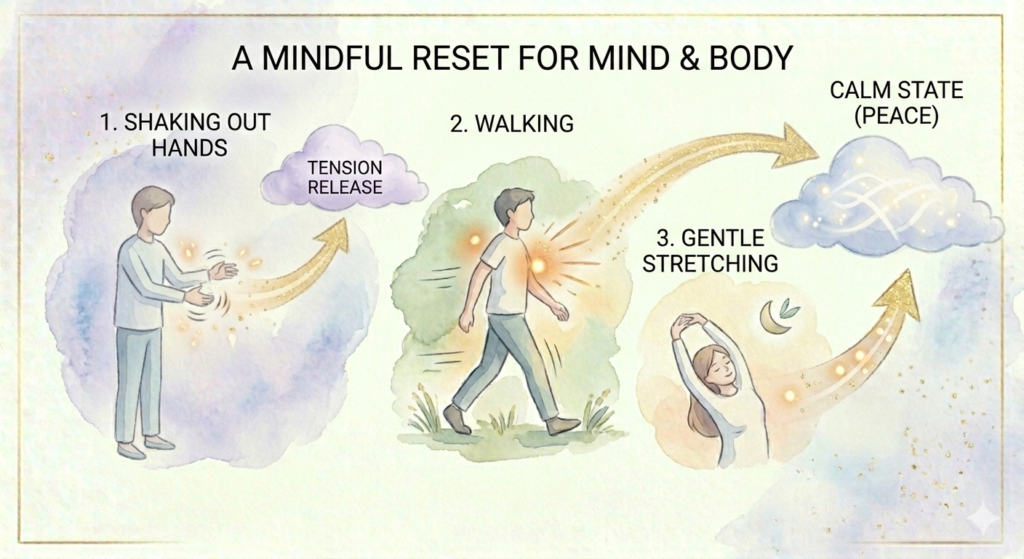
5. Complete the Stress Cycle
Peter Levine emphasizes discharge of stored energy.
Do one of these:
Shake your hands for 1 minute.
Walk quickly for 5 minutes.
Stretch your arms and back.
Effect:
Movement releases stored activation.
The body returns to baseline faster.
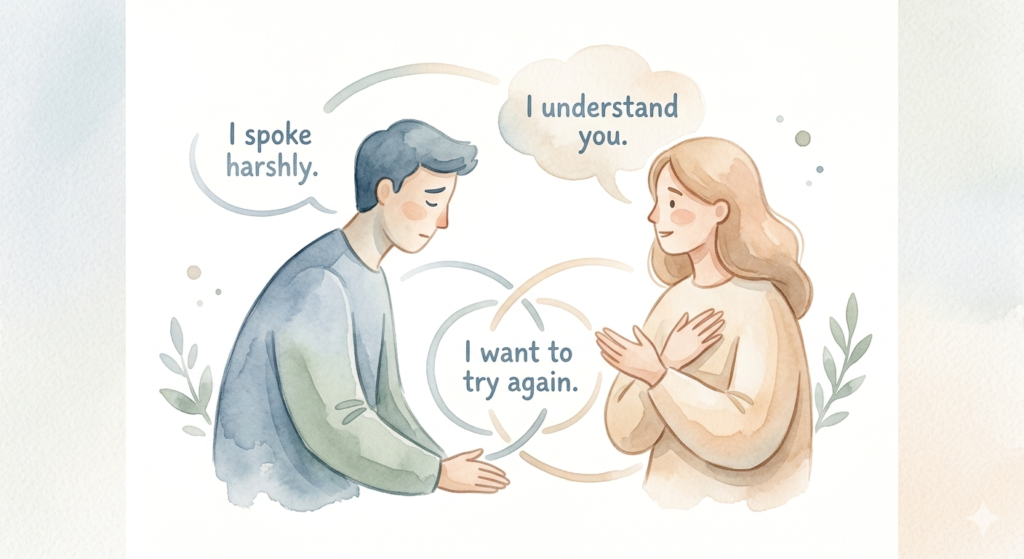
6. Use Repair Statements
Repair builds connection after conflict.
Examples:
“I spoke harshly.”
“I want to try again.”
“I understand your point better now.”
Impact:
Repair reduces long-term damage.
Repair builds trust gradually.
A Simple Analogy
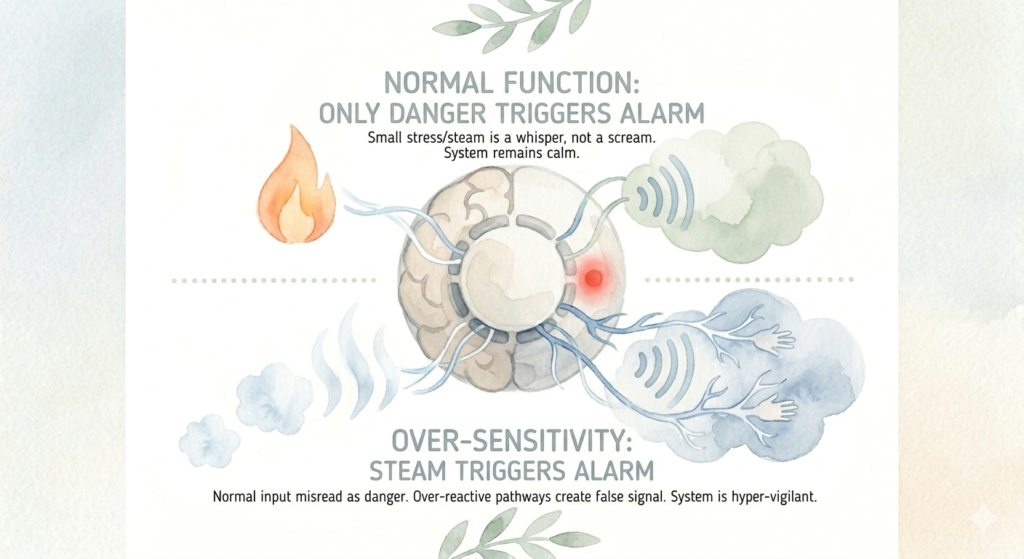
Think of your nervous system as a smoke alarm.
A sensitive alarm detects smoke quickly. A sensitive alarm also reacts to steam.
Trauma makes the alarm more sensitive. Your reaction is the alarm doing its job.
The goal is not to remove the alarm. The goal is to recalibrate the alarm.
What Therapy Adds
In my clinical practice, I use structured approaches based on research and lived experience. I work with emotional regulation, trauma processing, and relational patterns. I combine methods from body-based therapies, cognitive models, and trauma-focused techniques.
Therapy provides:
Safe processing of past experiences.
Reduction in trigger intensity.
Improved communication patterns.
Long-term nervous system regulation.
Research integration matters: I draw from established frameworks like those developed by Bessel van der Kolk, Francine Shapiro, and Peter Levine. I also engage with emerging research in neurobiology and behavioral science.
This combination ensures that therapy is both structured and human.
Final Thought
Fighting at home does not always mean something is wrong with the relationship.
Sometimes it means something inside you needs attention.
“Being able to feel safe with other people is probably the single most important aspect of mental health.” — Bessel van der Kolk
You can build that safety step by step. You can change your patterns with practice. You can respond differently without losing yourself.